


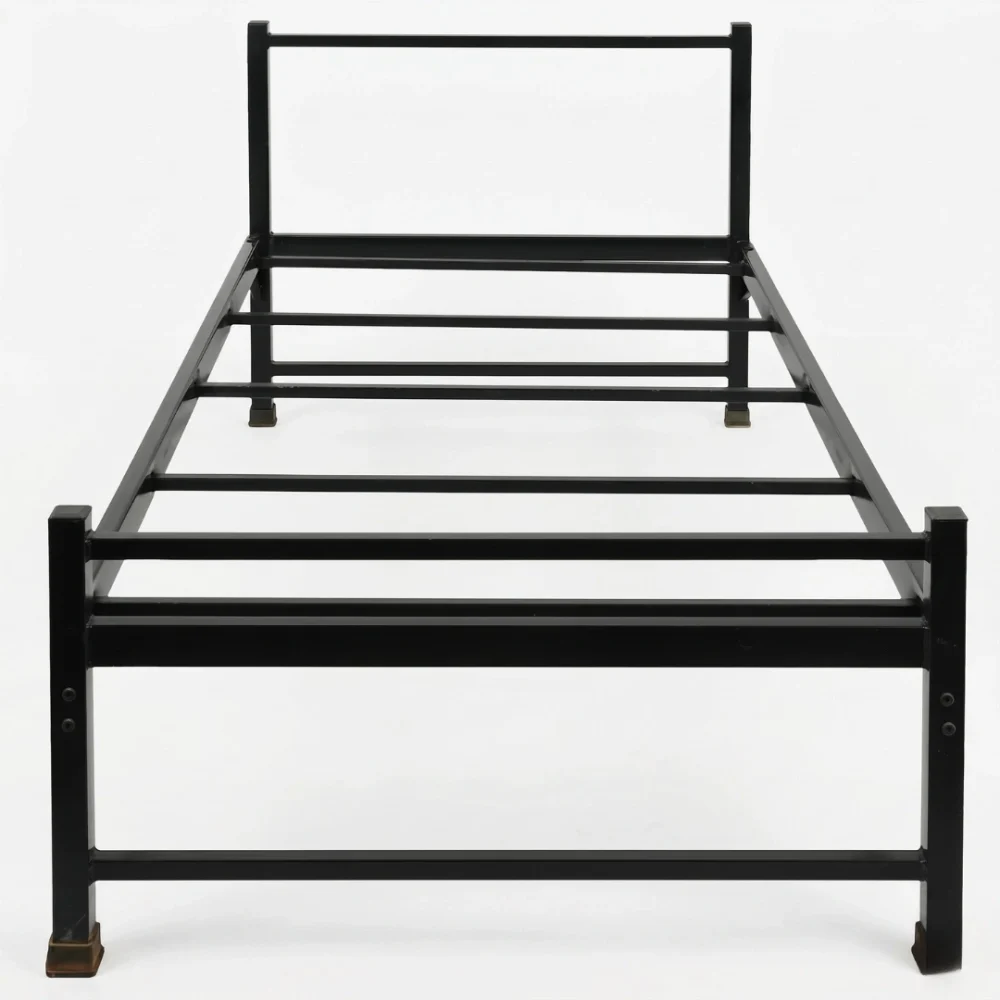


Single Bed Price in Bangladesh 2026
A single bed is a sleep frame designed for one person, available in wood, engineered board, and metal, and is suitable for children’s rooms, student housing, rental apartments, and compact urban bedrooms. In Bangladesh, single bed prices typically range from BDT 6,500 to BDT 55,000, depending on the material (solid wood vs. MDF), joinery method, finish type, and the size selected. Three factors most commonly influence the final price: the species of wood or board used, the complexity of the headboard design, and whether the bed includes under-frame storage. For buyers in Dhaka, Dhaka Furniture’s showroom in Mirpur offers a physical space to view and assess frames in person before purchase — a practical step given the difficulty of evaluating wood grain patterns, moisture content, and joint quality from photos alone.
Single Bed Buying Guide
Who Needs a Single Bed?
Single beds serve a wider range of buyers than the name suggests. In Bangladesh’s urban context, they are commonly purchased for:
- Children’s bedrooms — where a compact frame leaves room for a study table and wardrobe
- Hostel and student accommodation — lightweight MDF or metal frames that fit within tight room dimensions
- Rental apartments in Mirpur, Badda, and Uttara — where tenants prefer affordable, moveable options
- Guest rooms (Mehman culture) — many Bangladeshi households maintain a dedicated guest room stocked with one or two single beds for visiting relatives, particularly during Eid or family occasions like Biye (wedding) gatherings
- Elderly individuals who require a lower-profile, accessible bed height for joint comfort
For a broader look at compact and foldable alternatives, explore Dhaka Furniture’s Folding Bed — a practical option for apartments where the guest room doubles as a study.
Single Bed Size Guide
Standard single bed dimensions in Bangladesh follow these general measurements:
| Size Type | Approx. Dimensions | Suited For |
|---|---|---|
| Standard Single | 36″ × 78″ | Adults in compact rooms |
| Small Single | 30″ × 72″ | Children aged 6–12 |
| Super Single | 42″ × 84″ | Taller individuals |
Note: Mattress dimensions should always be confirmed alongside the frame before purchase. For paired options, Single Mattress is sized to match their bed frames.
What to Check Before Buying
- Room dimensions first — measure floor space and ceiling height before selecting a frame with a tall headboard
- Joinery quality — a well-built single bed uses mortise-and-tenon joints or dowel-reinforced connections, not just screws and adhesive
- Wood moisture content — frames built from unseasoned wood warp within one monsoon season in Dhaka; ask the seller specifically about kiln-drying or chemical seasoning
- Finish type — polyurethane (PU) coatings are more moisture-resistant than standard lacquer, which matters in Bangladesh’s climate
- Under-storage option — single beds with built-in drawer storage add functional value in small rooms
Single Bed Cost Breakdown: 2026 Price List
| Material | Price Range (BDT) | Best For |
|---|---|---|
| Segun / Teak | 28,000 – 55,000 | Long-term family use |
| Mahogany | 18,000 – 38,000 | Mid-budget quality builds |
| MDF / Engineered | 8,000 – 18,000 | Rental or short-term use |
| Metal / Steel | 7,500 – 15,000 | Hostel, student, institutional |
Material Comparison for Single Beds
Solid Wood (Teak / Segun and Mahogany)
Chittagong Teak (Segun) is widely regarded among Bangladesh’s craftsmen as the wood most naturally suited to the local climate. Its high oil content resists termite infestation — a real concern in older residential areas of Mirpur and Old Dhaka — and its tight grain pattern limits moisture absorption during monsoon months (June–October). A Segun single bed frame typically costs BDT 25,000–55,000 depending on headboard design.
Seasoned Mahogany is the most common alternative. It machines cleanly, accepts stain evenly, and costs noticeably less. Price range: BDT 16,000–38,000 for a standard single frame.
The structural longevity of furniture in Bangladesh depends heavily on the intrinsic properties of tropical timber, specifically how grain density influences the wood’s reaction to high-humidity cycles.
Engineered Wood (MDF and Particle Board)
Medium-density fibreboard (MDF) allows for consistent, smooth surfaces that take printed or laminated finishes well. It is significantly lighter than solid wood, which makes it easier to move — a practical consideration for renters. However, MDF absorbs moisture if the laminate seal is damaged, which can cause swelling at joints over time in Dhaka’s high-humidity environment. Price range for MDF single beds: BDT 8,000–18,000.
Metal / Steel Frames
Powder-coated steel frames offer the lowest maintenance of any material type — they do not warp, crack, or attract termites. They are common in hostel and institutional settings. Price range: BDT 7,500–15,000.
While single frames are compact, exploring the broader collection of solid wooden beds allows you to compare different timber grains and construction styles that offer superior longevity in tropical climates.
Single Bed Designs in Wood — What’s Available
Plain Panel Headboard
The most structurally simple design — a flat panel headboard with clean edges. Production cost is lower, which is reflected in pricing. Popular among buyers looking for a minimalist bedroom aesthetic.
Carved Headboard (Traditional Design)
Intricate floral or geometric carvings on the headboard. These designs are common in traditionally furnished homes and often seen in bedroom sets assembled for Biye (wedding) occasions. Carving adds roughly BDT 4,000–10,000 to the frame cost depending on complexity.
Storage Bed (Single with Drawers)
A single frame with one or two under-bed drawers — a significant space-saving feature in apartments where wardrobe space is limited. These are increasingly popular in Mirpur’s studio and one-bedroom apartment market.
Bunk Bed (Two-in-One Single)
For children’s rooms or shared student accommodation, bunk beds provide two sleeping surfaces in the vertical footprint of one. Dhaka Furniture’s Bunk Bed collection shows current design and pricing options.
For buyers who occasionally need a second sleeping surface without a permanent structure, the Sofa Cum Bed offers a dual-function alternative worth considering.
Pro-Tip Box: How to Identify Genuine Wood Quality
When inspecting a single bed frame in person, run your hand across the inner edge of the headboard frame — not the outer surface. Genuine solid wood will have a consistent grain direction on both inner and outer faces. Veneered MDF will show a slight seam or colour shift at the edge where the veneer wraps. Press your thumbnail lightly into a hidden area of the frame (e.g., underside of a slat): solid wood resists the pressure; particle board dents more easily. For seasoned wood specifically, check for the absence of “weeping” — small sap droplets or sticky patches on the surface — which indicate the wood was not properly kiln-dried before use. Unseasoned wood weeps within the first humid season and is a reliable indicator of a lower-cost production process.
Maintenance Tips for Single Beds in Bangladesh
Managing Humidity and Monsoon Conditions
Bangladesh’s annual monsoon season brings sustained humidity above 80% for several months. During this period:
- Avoid placing the bed directly against an exterior wall — moisture transfers through poorly insulated walls and can cause swelling in wood frames over time
- Use a dehumidifier or maintain cross-ventilation in the room where the bed is placed
- Inspect joints annually — seasonal humidity cycles cause wood to expand and contract, which can loosen mortise joints over years if not re-tightened
Termite Protection
Termite activity in Dhaka’s older residential areas (including parts of Mirpur and Old Dhaka) is a documented issue. Practical steps:
- Apply a borate-based wood preservative to the underside of the frame during the dry season
- Avoid placing the bed in direct contact with the floor if the room has a concrete base without proper damp-proofing
- Check the inner structure of the headboard annually — termites typically enter from internal cavities before surface damage becomes visible
Routine Cleaning
- Wipe wood frames with a lightly damp cloth — avoid soaking the surface
- Re-apply furniture polish (wax-based for solid wood, silicone-free for MDF laminates) every 6 months
- For metal frames, check the powder-coat surface for chips; touch up with matching spray paint before rust sets in during monsoon
Real Experience: A Recent Case from Dhaka Furniture
A family from Mirpur-12 visited Dhaka Furniture’s showroom in early 2026 to furnish a newly built children’s room for two school-age siblings. Their requirements were specific: two sleeping surfaces in a single room of approximately 10×12 feet, with storage for books and clothes built into or around the beds.
The showroom team walked them through three options: a standard bunk bed in Mahogany (BDT 32,000), two individual single beds with under-drawer storage in MDF (BDT 14,500 each), and a custom single-plus-study-unit combination in MDF with a wall-mounted shelf.
After measuring the room on-site using a measuring tape they brought with them, the family selected the bunk bed — which freed up floor space for a separate wardrobe. They also noted that viewing the joinery and finish quality in person confirmed their decision in a way that product photos had not. The completed room setup was delivered and installed within five working days.
What Our Customers Say
“I bought a single Mahogany bed from the Mirpur showroom for my son’s room. The finish is clean and the frame has held up through two monsoon seasons without any warping or creaking.” — Nasrin Ahmed., Mirpur-10
“The price was reasonable compared to similar items I had seen elsewhere, and the staff explained the difference between MDF and solid wood clearly without pushing me toward a more expensive option.” — Sabbir Hossain., Kazipara
“I visited to buy a single bed for a guest room and ended up also ordering a dressing table. The complete setup looks consistent and the delivery was on schedule.” — Faria Tasnim., Pallabi
What Makes Dhaka Furniture Different?
Dhaka Furniture operates as a manufacturer-to-retail model, meaning it produces furniture in its own facility and sells directly through its Mirpur showroom — without passing inventory through a distribution layer. This structure has specific implications for how buyers interact with pricing, product range, and customization.
- Factory-direct supply chain — buyers at the Mirpur showroom pay without distributor markup, which typically reflects a 15–25% cost difference compared to multi-tier retail channels carrying equivalent product categories.
- In-house production capacity — dimensional adjustments (e.g., a non-standard single bed length for a taller user) can be specified at point of sale and produced without subcontracting, which reduces turnaround time on custom orders.
- On-site physical product testing — the showroom maintains assembled display models, allowing buyers to assess frame stability, joint tightness, finish texture, and mattress-to-frame fit before committing to purchase — a step unavailable through online-only channels.
- Complementary product range in one location — buyers can complete a full bedroom setup (bed frame, mattress, wardrobe, dressing table) in a single showroom visit, which reduces the coordination cost of sourcing from multiple sellers.
- Climate-adapted materials and finishes — the production process applies eco-friendly finishes and moisture-resistant coatings developed for Bangladesh’s tropical humidity levels, rather than using finish specifications designed for temperate-climate markets.
Buyers comparing single bed options across Dhaka’s furniture market — from Old Dhaka’s established workshops to newer retail outlets in Badda and Uttara — will find that pricing, customisation flexibility, and in-person assessment conditions vary significantly between seller types. Understanding these structural differences helps buyers make decisions based on verifiable factors rather than surface-level price comparisons alone.
Notable Single Bed Trends in 2026
Warm Minimalism
The dominant design direction in 2026 combines clean, straight-edged frames with exposed natural wood grain. Low headboards with a matte lacquer or natural oil finish are replacing the ornately carved designs that dominated earlier decades. This aesthetic suits Dhaka’s growing urban apartment market, where room sizes have decreased and clutter-free interiors are a practical priority.
Under-Bed Storage Integration
As urban apartment footprints shrink, integrated drawer storage beneath single bed frames has become a mainstream request rather than a premium add-on. Buyers are increasingly specifying two or three pull-out drawers sized for folded clothing or seasonal items.
Eco-Friendly Finishes
Modern apartment living in Dhaka often involves enclosed, air-conditioned spaces where indoor air quality is a priority. To address this, the industry is transitioning toward water-based polyurethane and low-VOC lacquers that minimize chemical emissions. These finishes are designed to meet global material safety and sustainability standards, ensuring that furniture remains safe for long-term indoor use without compromising the integrity of the wood.
Metal-Wood Hybrid Frames
Combining a powder-coated steel base with a solid wood headboard panel is a growing design category — the metal base provides termite resistance and structural stability, while the wood headboard retains the warmth and visual texture that solid wood buyers typically prefer.
For buyers interested in how single bed designs compare to other compact bedroom solutions, Dhaka Furniture’s Simple Bed and Air Bed categories cover adjacent options at differing price and use-case profiles.
Research on long-term sleep ergonomics and bed frame height recommendations is available through the National Sleep Foundation — opens in a new tab — which publishes peer-reviewed guidance on sleep surface standards relevant to bed selection.
FAQ
Q: What is the price of a single bed in Bangladesh in 2026?
Single bed prices in Bangladesh in 2026 range from approximately BDT 7,500 for basic metal frames to BDT 55,000 for solid Segun (Teak) wooden frames. MDF single beds fall in the BDT 8,000–18,000 range, while Mahogany wood beds typically cost BDT 18,000–38,000 depending on design complexity.
Q: What is the standard size of a single bed in Bangladesh?
The most common single bed size in Bangladesh is 36 inches wide by 78 inches long (approximately 3 feet × 6.5 feet). A “super single” at 42×84 inches is available for taller users. Always confirm mattress dimensions match the frame before purchasing.
Q: Which wood is best for a single bed in Bangladesh?
Chittagong Teak (Segun) is widely considered the most durable option for Bangladesh’s climate due to its natural resistance to termites and moisture. Seasoned Mahogany is a reliable, lower-cost alternative. MDF is suitable for budget buyers in low-humidity rooms but requires proper laminate sealing to resist warping.
Q: How do I choose the right single bed design for a small room?
For small rooms, prioritise a low headboard design to maintain visual spaciousness, and select a frame with integrated under-bed storage to compensate for reduced wardrobe space. Avoid poster or canopy-style frames in rooms below 9 feet ceiling height.
Q: Where can I buy a single bed in Mirpur, Dhaka?
Dhaka Furniture operates a showroom in Mirpur where single beds in wood, MDF, and metal are available for in-person viewing. The showroom maintains assembled display models across price ranges, and custom sizing is available for non-standard dimensions.
Q: Does humidity affect wooden single beds in Bangladesh?
Yes. Unseasoned wood frames can warp, crack, or develop loose joints during Bangladesh’s monsoon season (June–October) when humidity consistently exceeds 80%. Frames made from kiln-dried or chemically seasoned wood, finished with moisture-resistant polyurethane coatings, perform significantly better over time.

