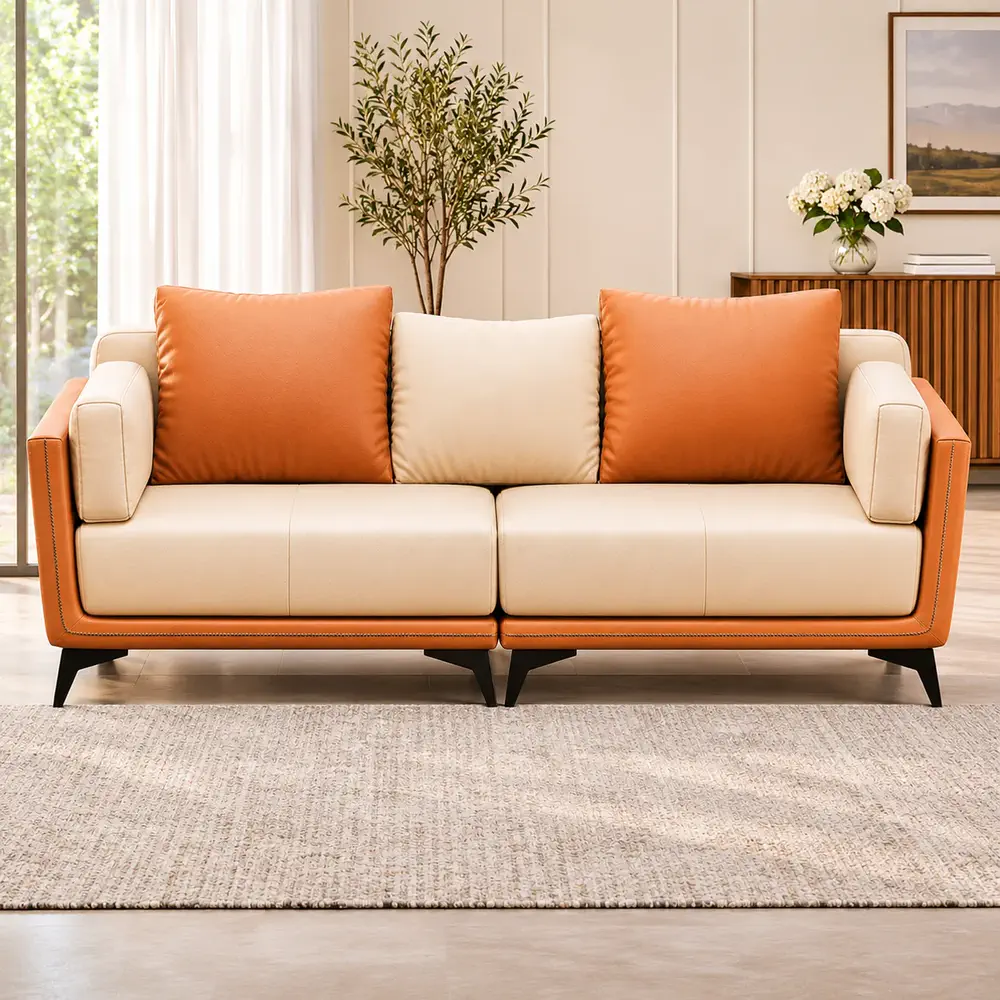
Wooden sofa or fabric sofa for a Dhaka flat
The choice between a wooden sofa and a fabric sofa is usually framed as a question of style. In Dhaka it is closer to a question of maintenance: one asks for polish twice a year, the other for a vacuum every fortnight and a new cover within a decade.
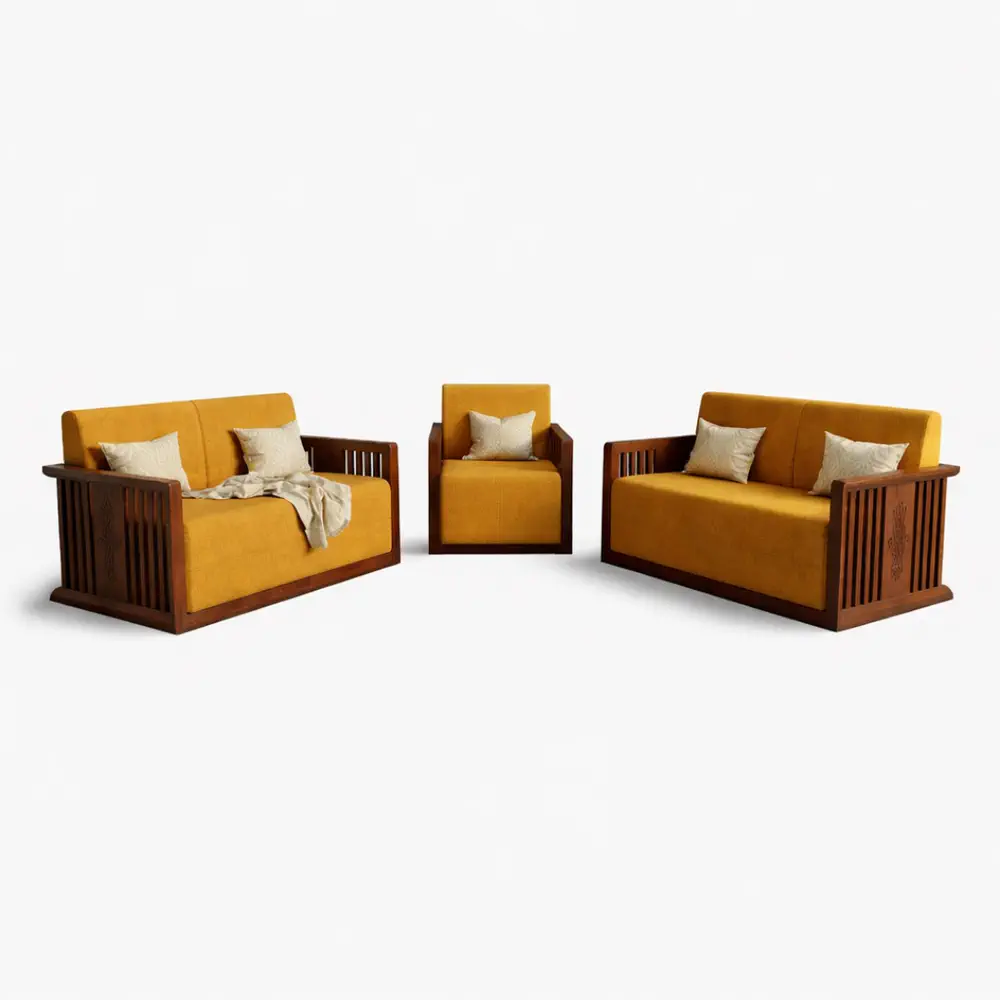
We build both, often on the same gorjon frame. The real difference sits in what wraps the frame, how the piece behaves in humid air, and how much of your weekend it quietly asks for over ten years of use.
What actually differs underneath
A wooden sofa and a fabric sofa can share a frame, foam and suspension. The visible timber is the difference: exposed wood leaves the joinery on display, so every joint has to be cut and finished well enough to be seen at close range by a guest sitting a metre away.
That exposure changes cost. Visible teak or mahogany costs more per cubic foot than a cover hides, and the finishing takes longer because there is nowhere to put a patch. A cover hides a shortcut; a polished arm does not. Fabric hides a frame; wood advertises it.
Wood through the monsoon
Exposed timber moves with the season. At 8 to 12 percent moisture content, a teak arm shifts less than a millimetre across a year, while a rail dried badly can open a 2 mm gap at the joint by June.
Wood also feels cooler than foam in a warm room, which is why older Dhaka flats still favour it. Dust sits on the surface and wipes off in one pass, and a spill beads on the surface instead of soaking in, which buys you time to find a cloth.
Fabric in daily use
A fabric sofa gives where you sit and holds warmth, pleasant in January and less so in June. The cover also absorbs sound, so a fabric three-seater makes a tiled or hard-surfaced room feel noticeably calmer.
The cost arrives later. Seat foam at 32 DNS flattens after five to seven years, and a tight weave at 300 grams per square metre shows wear on the arms well before the frame notices anything at all.
Matching the piece to the flat
Ground floor, poor ventilation, damp skirting: wood is the safer choice, because it does not hold moisture against the frame. Upper floor with cross breeze and air conditioning: fabric is comfortable and cheaper to renew when the cover eventually gives out.
Households with small children usually do better with fabric and a washable cover. Households that host formally, or that expect a piece to survive two moves, tend to prefer exposed wood with loose seat cushions.
Try both before deciding
Sit on a wooden sofa for ten minutes without a cushion. If your back complains, you want at least a fabric seat pad, and a wooden frame with loose cushions is a sensible middle path between the two.
Then measure the wall and the door as you would for any sofa. Ask what the frame timber is and how it was dried, because that answer matters more than the finish. Put both on the order before paying.
Frequently asked questions
Does a wooden sofa last longer than fabric?
The frame life is similar when both are built on seasoned timber; the difference is the surface. Wood can be sanded and polished again after ten years. Fabric has to be replaced, which costs a new cover and often new foam at the same time.
Is a wooden sofa comfortable without cushions?
For twenty minutes, usually. Beyond that, most people want a 75 to 100 mm seat pad at 32 DNS. The wooden frame gives support; the pad gives the give that a long evening of sitting actually needs.
Which is easier to keep clean in Dhaka dust?
Wood, clearly. A dry cloth takes the dust off in under a minute and polish goes on twice a year. Fabric needs vacuuming every fortnight and a deeper clean twice a year, and dust works its way into the weave between cleans.
Where to go next
Current prices for this range are on the Wooden Sofa price list. If you want to compare two sizes side by side, start with the category page. Send the wall measurement on WhatsApp and we will confirm what fits before you order.