Shoe rack planning for Dhaka flats
The entryway in a Dhaka flat is usually 1.2 metres wide, shared with the door swing, and asked to hold footwear for four people. A rack chosen by eye fails within a month, because the shelves sit 120mm apart and half the household wears boots.
We build racks in three depths and let the shelf pitch follow the shoes rather than the other way round. Work out the pair count first, then the layout.
Count pairs, not shelves
Walk through the flat and count every pair, including the ones under the bed and the formal shoes kept for weddings. A household of four in Dhaka commonly owns 18 to 25 pairs, and the monsoon adds a set of sandals that never fully dry.
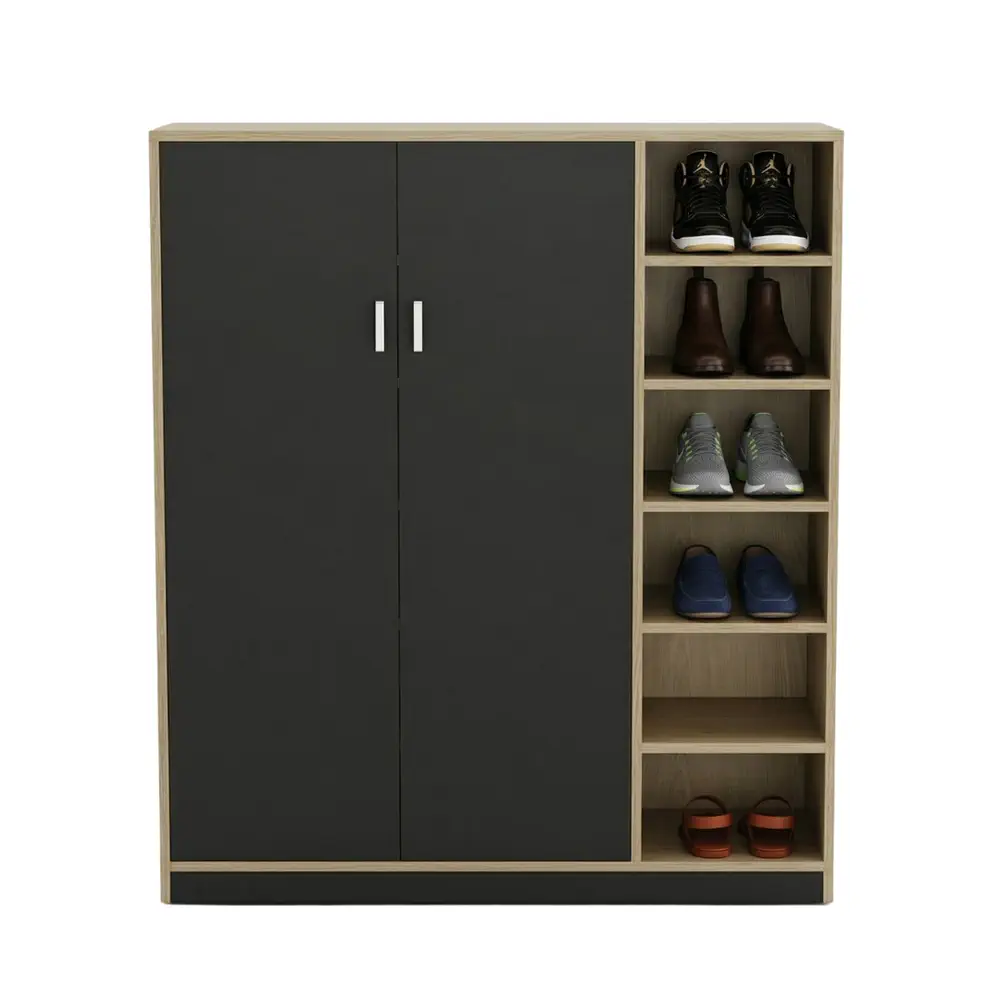
A 900mm wide, four-tier rack at 150mm pitch holds about 16 pairs of flat shoes. The same width as a closed cabinet holds 20 pairs, because deeper shelves allow a second row at the back. That difference of four pairs is usually the gap between a tidy entry and a pile by the door, so measure the depth before the width.
Pitch by shoe type
Flat sandals need 90mm. Sneakers need 130mm. Men's formal shoes on trees need 150mm, and ankle boots need 220mm. If every shelf sits at one pitch, you waste space at the bottom and crush the top row. Measure the tallest pair in the house, boots included, before fixing the pitch.
Set the lower shelves at 150mm, keep one bay at 240mm for boots, and hold a 100mm shelf for slippers. Adjustable pegs at 32mm spacing let the layout change when the household does. A rack with fixed shelves is cheaper to build, but it locks you into one shoe collection for its whole life. Check the entry wall depth before ordering, since 250mm is common.
Depth and the door swing
A men's size 10 shoe is about 300mm long. Add 20mm so the toe does not press the door and you need 320mm of internal depth. Shallow racks at 250mm force shoes in at an angle and halve the usable count. A 320mm internal depth is the figure to hold on to when comparing racks.
The entry door itself swings through 900mm. Keep the rack clear of that arc or move it onto the 400mm return wall beside the door. Past the rack, 600mm is the minimum walkway for two people passing with bags, and 750mm feels civilised in a narrow flat. Draw the arc on the floor with chalk before drilling anything.
Dust, damp and the next step
Open racks collect road dust within a week in most parts of the city. Doors help, but a closed cabinet holding wet shoes becomes a damp box, so add two 40mm vents or leave one bay open for the day's pair. A washable tray at the bottom catches the grit before it reaches the floor.
Measure the wall, count the pairs and note the tallest boot. Send those three figures to 01337-339693 and we will suggest a shelf layout. Standard racks ship in 2 to 5 working days, and a made-to-order width adds roughly a week. Delivery inside Dhaka runs from ৳500 to ৳1,500 depending on distance.
Frequently asked questions
How many pairs does a four-tier rack hold?
A 900mm wide rack at 150mm pitch holds about 16 pairs of flat shoes. With boots on a 240mm bay and a slipper shelf on top, the same footprint drops to 12 or 13 pairs but covers every shoe in the house.
What depth do I need for men's shoes?
Allow 320mm inside. A size 10 shoe measures about 300mm, and the extra 20mm stops the toe pressing the door. Racks at 250mm deep force shoes in sideways and cut the number of usable pairs by roughly half.
Should a shoe rack have doors in Dhaka?
Doors keep off the dust that collects within a week, but they also trap damp from wet shoes. Use vented doors, or keep one open bay for the pair worn that day. A removable tray underneath makes cleaning much easier.
Where to go next
Current prices for this range are on the Shoe Rack price list. If you want to compare two sizes side by side, start with Shoe Rack Cabinet – Black & Natural Laminate and Multi-Tier Shoe Rack – Laminate. Send the wall measurement on WhatsApp and we will confirm what fits before you order.