Dinner wagon: the storage piece that earns its keep
A dinner wagon does one job well: it moves what you need between the kitchen and the table in a single trip. Plates, cutlery, a jug, the serving dish that will not fit on the table, all of it goes on one shelf and arrives together.
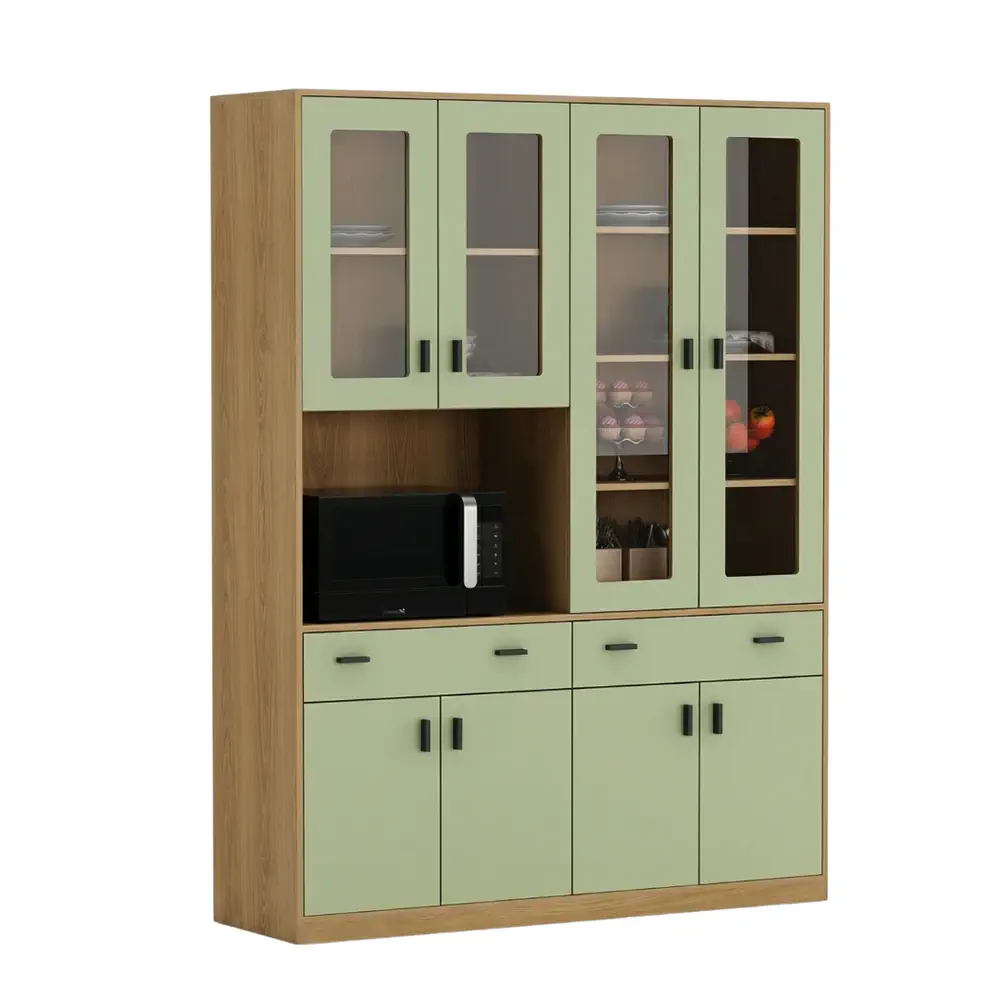
That sounds modest until you have carried four plates across a room twice a day for a year. In a flat where the kitchen is a corridor and the table is in the living room, the wagon earns its floor space. It is a trolley with shelves, and the shelves are the point.
What it actually holds
Two or three tiers at 700 to 800 mm wide will take a dinner service for six, plus a jug and a stack of side plates. Deeper than 450 mm and it stops fitting through a kitchen doorway.
The top tier is the working surface, so it should be clear of rails and lips. The lower tiers hold the weight, which is why the frame and not the shelf should carry it. A 250 mm gap clears a dinner plate standing on edge.
Height, worktop and reach
A wagon top at 850 to 900 mm matches a kitchen counter, so you can slide a dish across without lifting it. Below 800 mm you bend; above 950 mm the top becomes a shelf rather than a surface. Matching the kitchen counter makes it feel like an extension of it.
Check the reach to the bottom tier. If it is lower than 250 mm from the floor, you will kneel to load it, which is where the piece stops being convenient. A 20 mm upstand on the top stops a jug sliding off.
Wheels: the part that decides
Castors of 75 to 100 mm roll over a tile joint and a door threshold; 50 mm castors catch and skid. Two of the four should have brakes, or the wagon drifts every time somebody leans on it. Larger castors also roll over a rug edge without stopping.
A loaded wagon can weigh 30 kg. Push it across a room once before buying, and listen for a rattle in the frame, which means the joints are loose rather than tight. A frame that racks is screwed rather than mortised.
Where to park it between meals
The useful position is within 900 mm of the kitchen door and within reach of the table, which often means the end of a wall or the gap beside a fridge. It needs no more than 500 mm of wall.
In a dining room, a wagon replaces a sideboard at a third of the footprint. In a kitchen, it becomes the surface you never had, provided it can be wheeled out of the walkway. Keep it out of the triangle between fridge, sink and table.
Build, drawers and the last check
Solid timber frames outlast board, especially at the joints where the castors bolt on. A drawer at the top is worth more than a third shelf, because cutlery and napkins are what you reach for most. A 350 mm drawer holds cutlery for eight.
Before ordering, measure the doorway it must pass through and the gap where it will live, measured with the fridge door open. A 750 mm wagon will not pass a 700 mm kitchen door, whatever the plan says.
Frequently asked questions
What is a dinner wagon used for?
Carrying plates, cutlery and serving dishes between kitchen and table, then holding them between meals. It also works as a small sideboard in a dining room of a flat where a full cabinet would block the walkway.
How wide should a dinner wagon be?
Between 700 and 800 mm suits most flats and passes a standard doorway. Wider than 850 mm it becomes a sideboard and stops being easy to move, which defeats the purpose of something on castors.
Do the wheels scratch a tiled floor?
Rubber or polyurethane castors at 75 mm or more do not scratch glazed tiles. Nylon castors and grit are what leave marks, so sweep before moving a loaded wagon and fit braked castors on two wheels.
Where to go next
Current prices for this range are on the Dinner Wagon price list. If you want to compare two sizes side by side, start with Premium Dinner Wagon – Red Oak and Kitchen Dinner Wagon – Glass. Send the wall measurement on WhatsApp and we will confirm what fits before you order.