Kitchen cabinet boards that survive steam
Steam is the real test of a kitchen cabinet, not weight. A rice cooker running for 40 minutes puts more moisture into the air than a long shower, and it settles on the coolest surface in the room, which is usually a cabinet door.
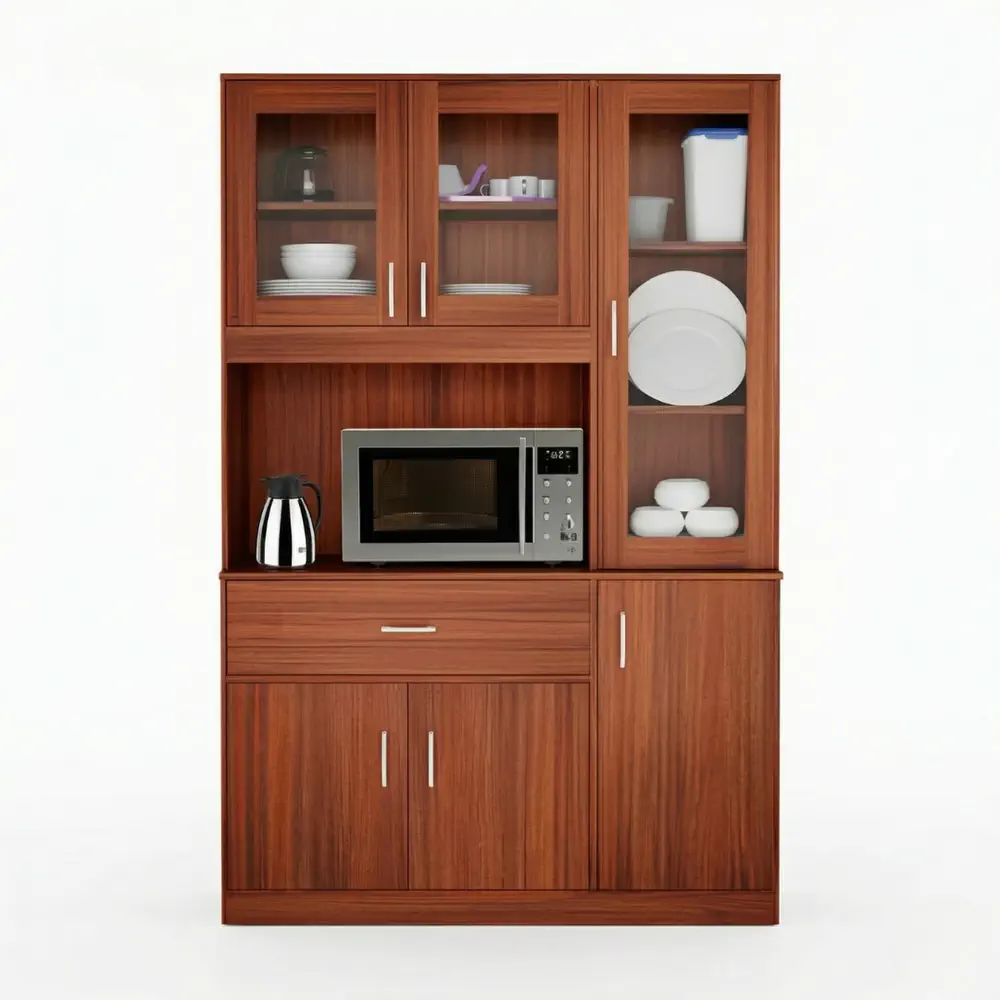
Board choice decides how that moisture is handled. We cut cabinets from three materials in our workshop, and each one behaves differently after two monsoons.
What steam does to a board
Moisture enters through cut edges, hinge holes and any scratch that reaches the core. Medium-density fibreboard swells 8 to 12 per cent when it takes on water and does not return to its original thickness. Plywood swells along its plies but recovers more of its shape.
The steam itself does less damage than the condensation that follows it. A door that stays wet for 20 minutes a day fails at the bottom edge first, because water runs down and sits on the frame. Wipe that edge dry after cooking and you add years to the door. A 40mm gap between the hob and the nearest upper cabinet helps more than any coating.
MDF, plywood and faced board
MDF gives a flat, stable door and takes paint or laminate cleanly, which is why it dominates kitchen doors. Its weakness is the core. Seal every cut edge with 2mm. PVC banding and a bead of silicone along the sink run Band the hinge holes as well, since a screw hole is a cut edge in miniature.
Plywood holds screws better at the hinges and survives a leak with less damage. Melamine-faced chipboard is the budget option; it works for upper cabinets away from the hob but performs poorly beside a sink. None of the three enjoys standing water for more than an hour, and none can be repaired once the core has swollen.
Where the water actually goes
Look at the cabinet under the sink. A 600mm base unit there takes the waste trap, the cleaning bottles and every small leak. Line the base with a 1mm. PVC or aluminium tray and check the trap joint twice a year A tray costs little and saves the base panel, which cannot be repaired once it swells.
Raise the carcass on a 100mm plinth instead of letting it sit on the floor. A plinth keeps the board out of mopping water and lets you see a leak before the base swells. Seal the plinth-to-floor joint with silicone, and leave the sink bay without a shelf so you can reach the trap. A 300mm gap at the back of that bay allows the pipe to be tightened without dismantling anything.
Edge banding and hardware
A 2mm PVC edge is the least expensive protection you can specify. Thin 0.5mm tape wears through at the handle within a year and exposes the core. Hinges should be steel with a damped close, and each hinge hole gets a drop of sealant before the screw goes in.
Photograph the sink run and the hob position, note the base widths, and send the measurements to 01337-339693 on WhatsApp. Custom kitchen cabinets take 7 to 14 working days and carry a one-year warranty against manufacturing defects. A standard run of in-stock units arrives in 2 to 5 working days.
Frequently asked questions
Is MDF bad for a kitchen in Dhaka?
Not on its own. Sealed MDF doors perform well when every cut edge carries 2mm banding and the sink base is lined. The failure mode is an unsealed core rather than the material, and that is a build detail you can specify.
How high should a kitchen plinth be?
100mm is the working norm. It lifts the carcass above mopping water and leaves room to spot a leak. Below 60mm the base sits in the splash zone, and above 150mm the worktop starts to feel high for shorter users.
Do kitchen cabinets carry a warranty?
All non-sofa furniture carries a one-year warranty against manufacturing defects, covering delamination and hinge failure from the build. It does not cover swelling caused by a leaking pipe or water left standing on a door.
Where to go next
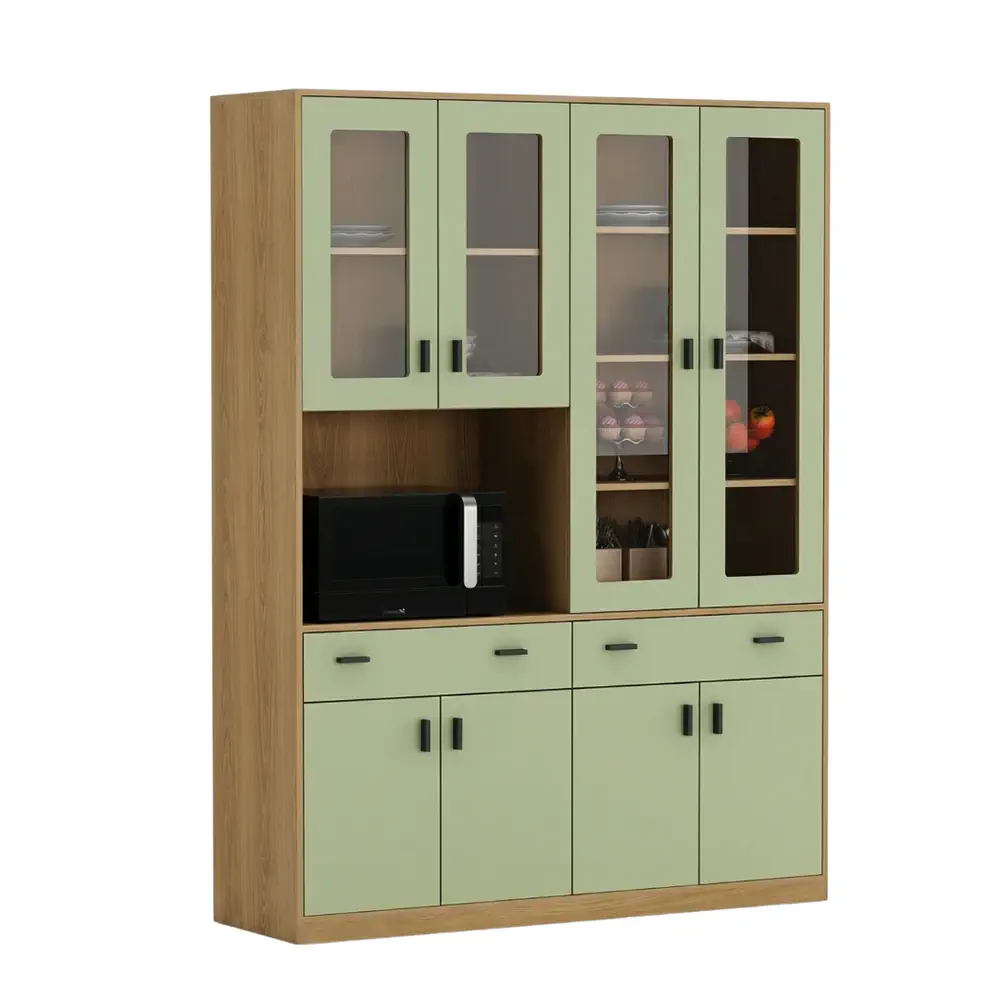
Current prices for this range are on the Kitchen Cabinet price list. If you want to compare two sizes side by side, start with MDF Kitchen Cabinet – Chocolate and Aura Kitchen Cabinet – White Laminate. Send the wall measurement on WhatsApp and we will confirm what fits before you order.