Bunk bed safety for small bedrooms
A bunk bed fails in one of two ways: a guard rail that sits too low, or a ladder that was never fixed to the frame. Both are visible before anyone sleeps up there, and both are cheap to correct at the workshop.
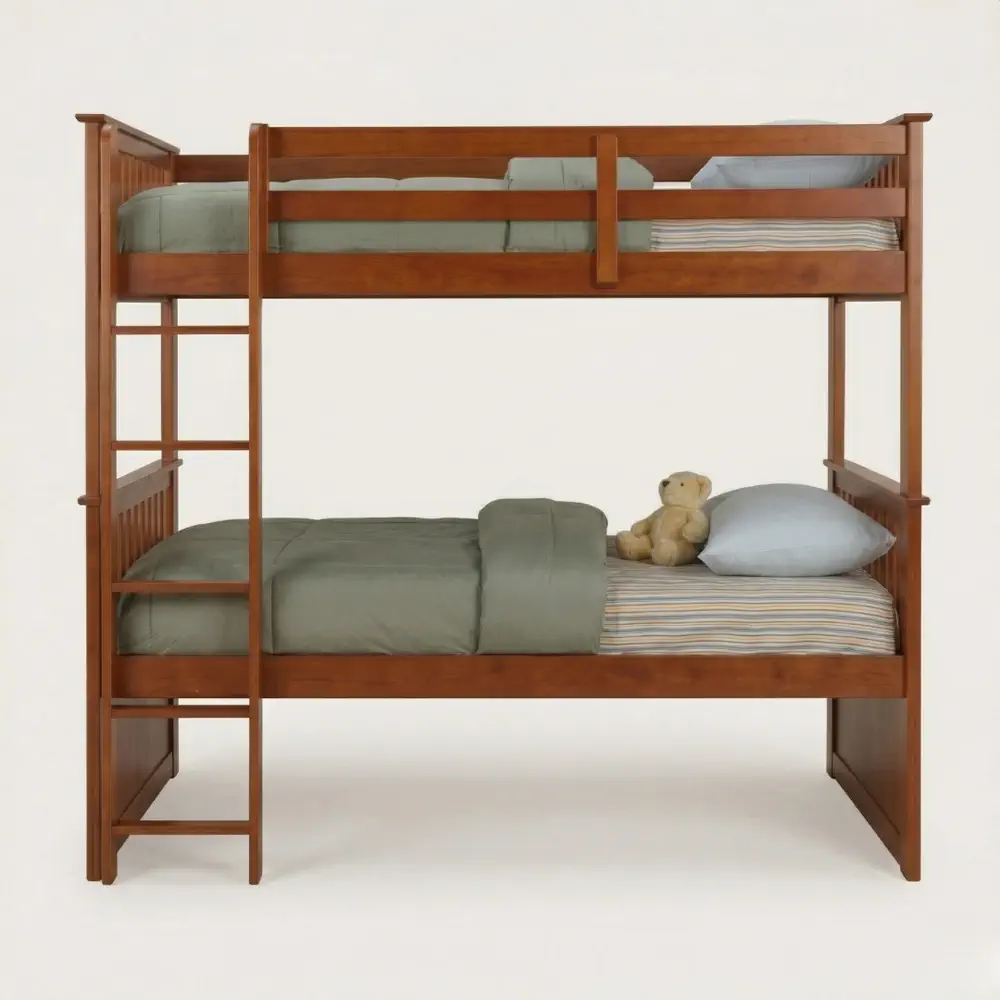
The rest is arithmetic. Rail height, mattress depth, ladder angle and the gap between the two bunks decide whether the piece is furniture or a climbing frame with a mattress on top. None of it is exotic; it is the difference between a bed built for a catalogue and one built for a house.
Guard rails and the 350 mm rule
A top bunk needs a guard rail that stands at least 350 mm above the mattress surface, on both long sides and across the foot. Measured from the mattress, not the frame, because the mattress compresses under a sleeping child. A rail that stops at the head end leaves the foot open.
Check the gap between the rail and the mattress. More than 75 mm and a small body can slide through; a snug fit at the head end matters as much as height. Measure at the corner, where a mattress compresses most under a knee.
Mattress depth changes everything
A 200 mm mattress on a bunk with a 350 mm rail leaves only 150 mm of barrier, which is not enough. Top bunks should carry a mattress of 100 to 150 mm so the rail keeps its full height. This is the most common mistake we see on delivered bunks, and it stays invisible until a child leans out.
The lower bunk can take a deeper mattress, but keep both surfaces at least 250 mm apart so nobody sits up into the frame above. Measure that gap with the mattresses in place. A 200 mm lower mattress under a 150 mm upper one usually clears.
Ladders that stay put
A ladder hooks onto the frame or bolts through it; a ladder that simply leans is a fall waiting for a distracted evening. Look for two fixing points at the top and feet that sit flat on the floor. Test the fixing by pulling the ladder away from the frame with one hand.
Rungs should be at least 300 mm wide and flat underfoot. Round rungs are painful on bare feet at night, and a 15 to 20 degree lean is easier to climb than a vertical one.
Stability and the wall
A bunk bed is tall and narrow, so it tips more easily than a single. Fix the frame to the wall with a bracket, or choose a design with a wide base and cross bracing at the back.
Four adults should be able to push the top corner without the frame lifting a foot. If it lifts, the bed needs bracing or a different position, ideally into a corner with two walls behind it. A corner position halves the tipping risk without any hardware at all.
Who sleeps on top
Children under six should not use a top bunk, whatever the frame says. Above that, the rule that works is one child per bunk, no sharing, and no hanging anything from the rail. Set that rule before the bed arrives, not after the first argument.
Before ordering, measure the ceiling. A 1.8 metre top bunk with a 150 mm mattress leaves less than a metre of headroom in a 2.7 metre room, which is tight for an adult making the bed. Allow 800 mm beside the frame for a chair or a small table.
Frequently asked questions
What is a safe height for a top bunk?
Keep the mattress surface of the top bunk under 1.8 metres from the floor, and leave at least 750 mm between the top mattress and the ceiling. Higher than that, making the bed and lifting a child down both become risky.
How thick should a bunk mattress be?
Between 100 and 150 mm. Anything deeper eats into the guard rail height and reduces the gap between bunks. A 100 mm mattress at 32 DNS supports a child well and keeps the rail doing its job.
Can a bunk bed be separated into two beds?
Some can, if the frame is built as two stacking units with independent legs. Ask before buying, because a bunk designed as one tall frame cannot be split safely, even though the two halves look like separate beds.
Where to go next
Current prices for this range are on the Bed price list. If you want to compare two sizes side by side, start with Wooden Bunk Bed – Wood and Arctic Bunk Bed – White Steel. Send the wall measurement on WhatsApp and we will confirm what fits before you order.