Boss table sizes for a small office
A boss table is bought for the room it sits in as much as for the work done at it. In a 12 square metre office a 2,100mm table leaves 900mm behind the chair and nothing for a visitor; in 18 square metres the same table looks correct.
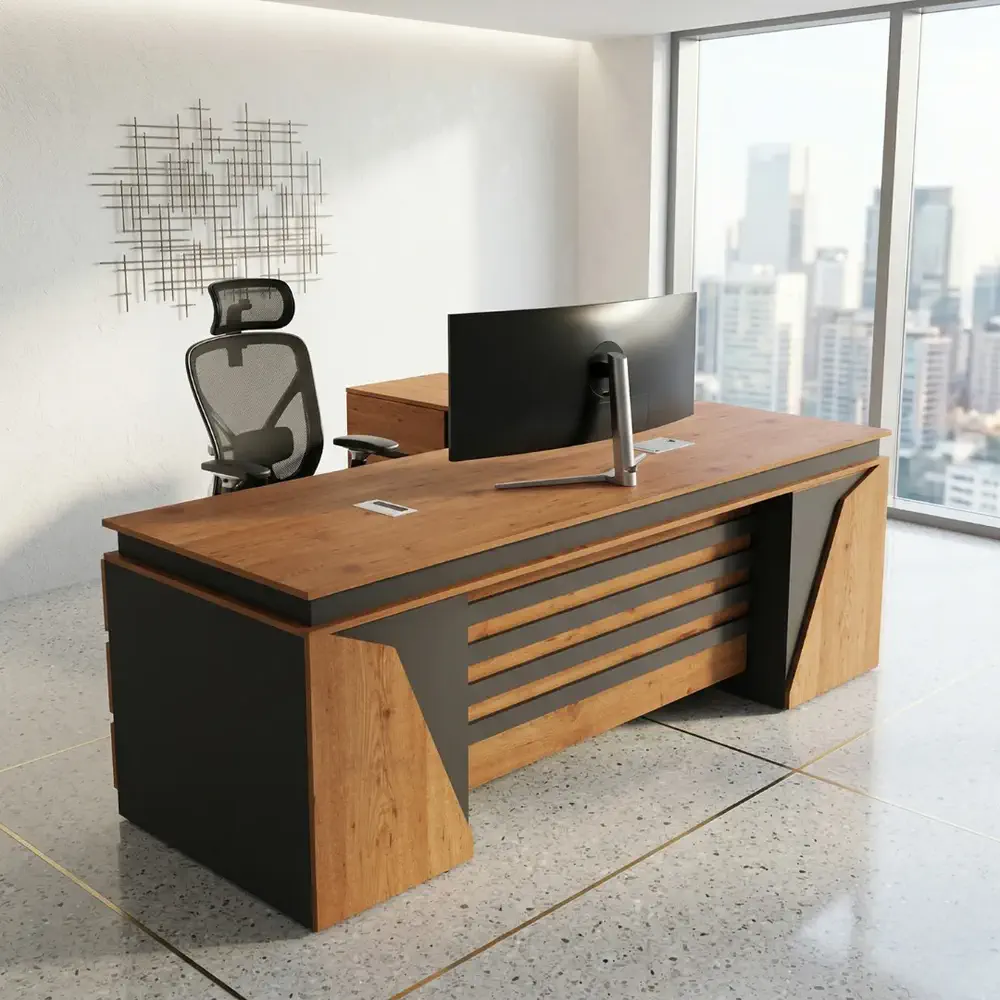
We cut boss tables in three footprints and scale custom sizes when a room is awkward. Here is how to choose one without turning the office into a corridor.
The three footprints
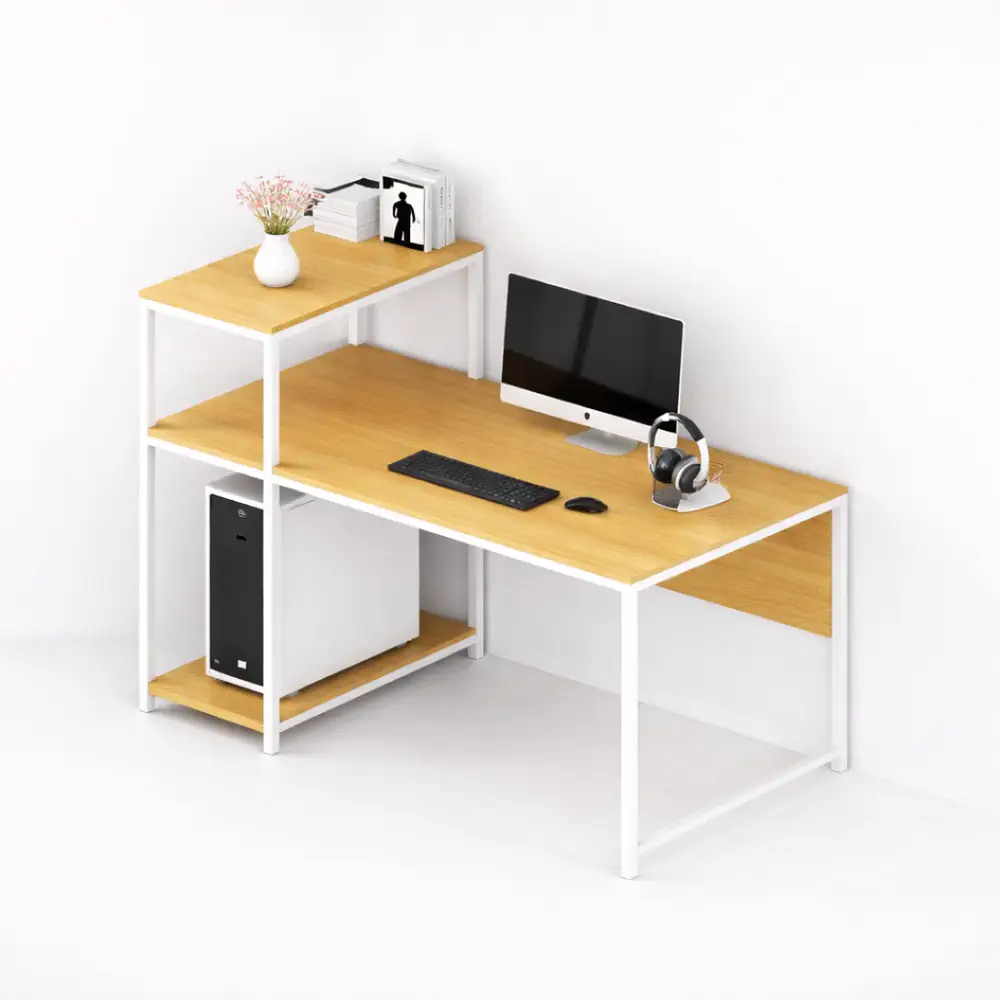
The common sizes are 1,800mm by 900mm, 2,100mm by 900mm, and an L-shape with a 1,800mm main top and a 1,200mm return. Depth stays at 900mm because a monitor at 500mm plus a document in front needs it. A shallower top forces the monitor forward and leaves the document tray nowhere.
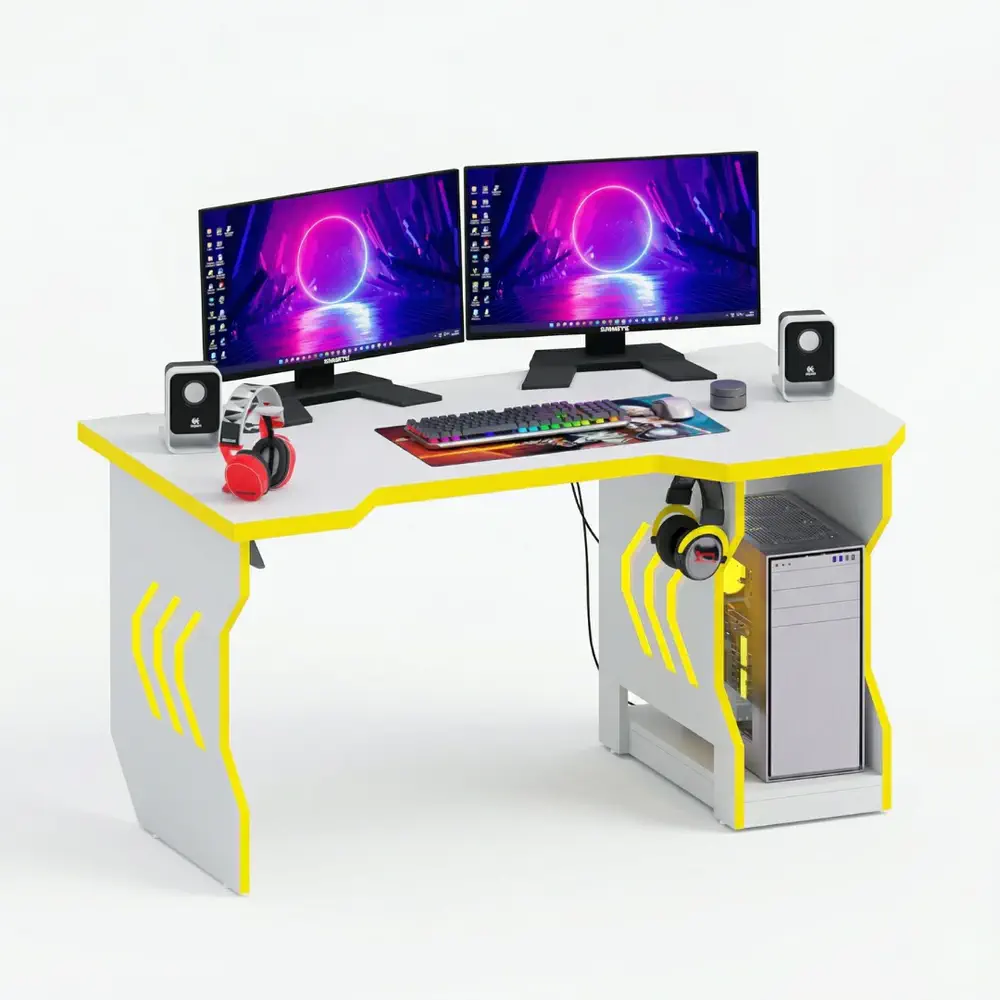
A 1,800mm table suits one person and two visitor chairs. The 2,100mm version adds room for a second working position or a printer. The L-shape adds 1.2 square metres of surface but takes the same floor as a 2,400mm straight table. Measure the return against the window wall before choosing between the two.
Clearance around the table
Allow 900mm behind the chair for pushing back and walking past, 750mm on the visitor side, and 1,200mm if a chair has to pull out without hitting the wall. In a 3.3-metre wide room, a 900mm deep table leaves 1,200mm on each side. A 2,100mm table in the same room leaves 750mm, which is tight for a visitor.
Corner offices usually take the L-shape with the return against the window wall. Check the door swing before committing, because a 1,800mm return can block a 900mm door from opening fully. Draw the plan on paper at 1:20 and move cardboard cutouts around. Allow 50mm for the skirting, which most floor plans leave out.
What the top has to carry
Two 27-inch monitors weigh 12kg to 16kg with stands and need 1,000mm of width. Add a laptop, a document tray and a phone, and the working zone is 1,400mm. A 900mm deep top keeps the reading distance at 600mm to 700mm. A pedestal at 400mm wide leaves 500mm of knee space under a 900mm top.
Drawers take 400mm of depth under the top, which leaves 500mm of knee space. Check that a pedestal does not collide with the chair base at 650mm across. Cable ports at the back should be 60mm, not 40mm, once a monitor and a charger share them.
The visitor edge
The visitor side of a boss table is a working surface too. Allow 1,200mm of clear width for two chairs and 750mm of depth from the table edge to the wall, so a visitor can stand and shake hands without trapping the chair. Two visitors at 600mm each need 1,200mm, measured along the front edge.
A 2,100mm table seats two visitors comfortably and three tightly. If the room hosts four-person reviews, plan a separate 2,400mm meeting table instead of pushing extra chairs against the boss table. Chairs crammed at the end block the drawer pedestal. Move the pedestal to the far side if the room only allows three chairs.
Finish, timber and the next step
Tops are usually 25mm board with a veneer or laminate face. Veneer shows grain and can be sanded once; laminate resists a spilled cup better and is easier to match on a later order. Both are fine, but do not mix them on adjoining tables.
Frame timber is seasoned gorjon, mahogany or teak at 8 to 12 per cent moisture content, which matters in an air-conditioned room. Note the room width, door swing and the number of visitors, then message 01337-339693. Made-to-order tables take 7 to 14 working days and carry a one-year warranty.
Frequently asked questions
What size boss table fits a 12 square metre office?
A 1,800mm by 900mm table fits if you keep 900mm behind the chair and 750mm on the visitor side. Below that, a 1,600mm top or an L-shape with a short return works better. Draw the room to scale before deciding.
Is an L-shaped table better than a straight one?
It gives 1.2 square metres more surface for the same floor area as a longer straight table, and it puts the return against a wall. The catch is the corner: check that the return does not block a door or a window opening.
How thick should a boss table top be?
25mm is the working standard and stays flat across a 2,100mm span with a frame underneath. Thinner tops need a stiffener, and thicker tops at 40mm look heavy in a small office. The frame matters more than the extra 15mm of board.
Where to go next
Current prices for this range are on the Office Desk price list. If you want to compare two sizes side by side, start with Summit Boss Table – Laminate and L-Shaped Director Table – Melamine. Send the wall measurement on WhatsApp and we will confirm what fits before you order.